

Bruxism Treatment
Indianapolis & Fishers, IN
At Implant Dentistry and Periodontics, we offer a wide range of periodontal and dental implant services. Our caring and compassionate team has one collective priority and that is your smile.
Bruxism is a sleep disorder that involves the clenching or grinding of teeth, especially while sleeping
You might be grinding your teeth without even realizing it. Bruxism is the term for repeated teeth grinding or jaw clenching, and it can happen while you're asleep or during the day. Some people catch themselves clenching their jaws when they're stressed or concentrating, while others don't notice anything until a dentist finds unusual wear on their teeth.
Occasional grinding isn't necessarily a problem, but when it happens frequently or with enough force, it can take a toll on your teeth and jaw. Over time, the pressure can wear down enamel, cause teeth to chip or crack, and leave your jaw muscles feeling sore. Some people also experience headaches or increased tooth sensitivity.
There isn't always an obvious reason why someone develops bruxism. Stress and anxiety can contribute to the problem, but certain medications, sleep disorders, and other factors may also play a role. Because teeth can wear down for reasons unrelated to grinding, it's important to have the condition properly evaluated before deciding on treatment.
Depending on your symptoms, treatment might involve wearing a custom nightguard to protect your teeth, finding ways to reduce daytime clenching, or addressing contributing factors such as stress or sleep problems. A nightguard won't necessarily stop you from grinding, but it can help limit the damage to your teeth.
Some common signs of bruxism include:
- Frequent headaches, particularly around your temples
- Jaw soreness or stiffness, especially in the morning
- Teeth that appear flattened, chipped, or worn down
- Increased tooth sensitivity
- Pain around your jaw or ears
- Grinding sounds during sleep that someone else may notice
- Tired or tight jaw muscles throughout the day
At Implant Dentistry and Periodontics, we can examine your teeth and gums, discuss your symptoms, and help determine what may be causing your discomfort. If you're concerned about teeth grinding or have noticed changes in your bite, call our Indianapolis office at 317-574-0600 or our Fishers office at 317-842-2273 to schedule a consultation.
Award Winning Periodontics
in Indianapolis and Fishers
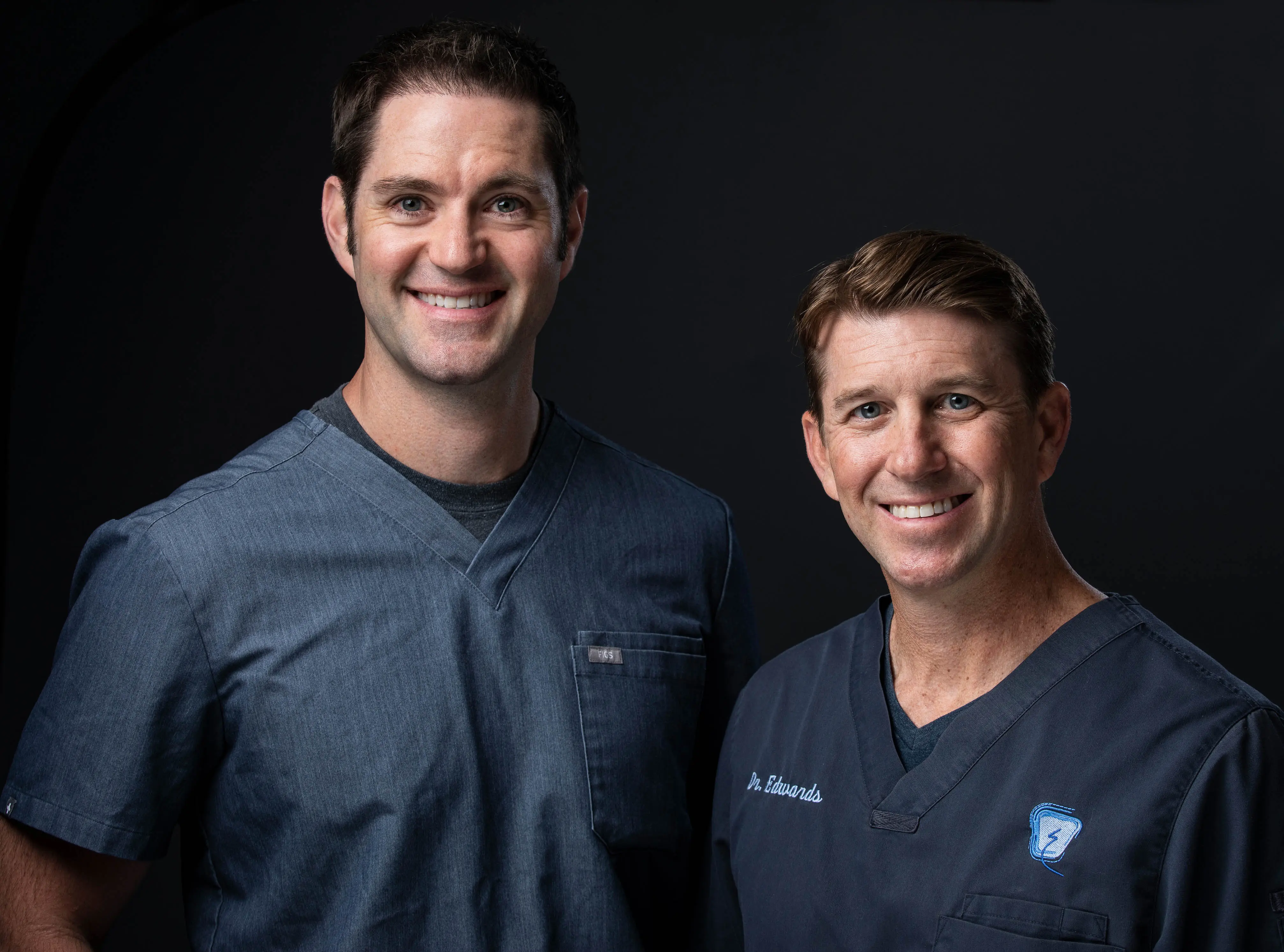
Dedication to providing the best periodontal care to Indianapolis and Fishers isn't just something Drs. Edwards and Christman talk about. They have gone above and beyond what most periodontists do to master his field of work. They have sought out further education to bring the most promising new treatments to their patients.
Diagnosing Bruxism
To determine if you might have bruxism, you begin by scheduling an initial examination, at which time the staff at Implant Dentistry and Periodontics will inspect for indications of enamel loss and the overall severity of your case. If you have a more severe case, we may need to introduce a dental crown to protect a damaged tooth, or if you have a less severe case, you may simply need to start wearing a nightguard.
If we do diagnose you with bruxism, it is important to schedule your treatment as soon as possible. If the bruxism is left untreated, it can cause the following issues to develop:
- Facial pain: If you have untreated bruxism you may frequently complain about pain around your jaw, as well as some possible facial swelling and frequent headaches.
- Gum recession: Untreated bruxism can be a contributing factor to why you may develop periodontal disease that then leads to gum recession, and if left untreated even longer, tooth loss. Due to the constant excessive grinding of your teeth, damage occurs to the soft tissue, which then causes the teeth to become loose. Once teeth are loosened, the pockets between the gums will become deeper, which then allows for additional bacteria to become trapped. When this happens, and it will, the structure of the tooth and the jawbone will begin to decay.
- Occlusal trauma: Bruxism results in continued friction and added pressure being placed on the surfaces of the teeth, which will eventually weaken the chewing surfaces. Once these surfaces have become worn down, any one of your teeth is more prone to cracking.
- TMJ: Everyone has two temporomandibular joints (TMJ), one on the left and one on the right. Bruxism, if left untreated, can eventually damage these joints, which will result in you developing TMJ. Symptoms of TMJ are clicking or popping in the jaw joint, along with muscle or jaw joint discomfort and pain. Other symptoms include headaches, tinnitus, difficulty opening your jaw or a jaw that locks in place, and sometimes numbness in your fingertips and your face.

At Implant Dentistry and Periodontics, we offer a wide range of periodontal and dental implant services. Our caring and compassionate team has one collective priority and that is your smile.
Contact Our Team Today
Treating Bruxism
There are several solutions available at Implant Dentistry and Periodontics for treating bruxism. To determine which treatment option is best for you, it will be necessary to isolate the root cause of your issue. If the root cause appears to be related to undue stress, we may strongly encourage you to make some lifestyle changes, such as including the practicing of yoga, or meditating, and other self-care practices for state of mind.
If these treatment plans do not result in improved symptoms, the following treatment options are also available.
- Mouthguards or Nightguards: One of the most effective methods for treating bruxism is a custom-fitted mouthguard that can be worn at night. This mouthguard will effectively reduce the abrasive clenching and grinding action that occurs on the surfaces of your teeth while you sleep. Wearing a mouthguard over a period of time will help stabilize your occlusion and therefore prevent TMJ or additional damage to your teeth from occurring.
- Botox: This has become an increasingly popular option for the treatment of bruxism. By injecting Botox into specific targeted areas, the muscles will become weakened such that grinding will not occur as frequently, but it will not weaken them to the point where your daily activities such as speaking or chewing will be impacted in a negative fashion.
- NTI-tss device: This is a device that covers your front teeth. The NTI-tss device limits the contraction of the temporalis muscle, which results in preventing your rear molars from grinding.
State of the Art Technology
For Advanced Periodontics
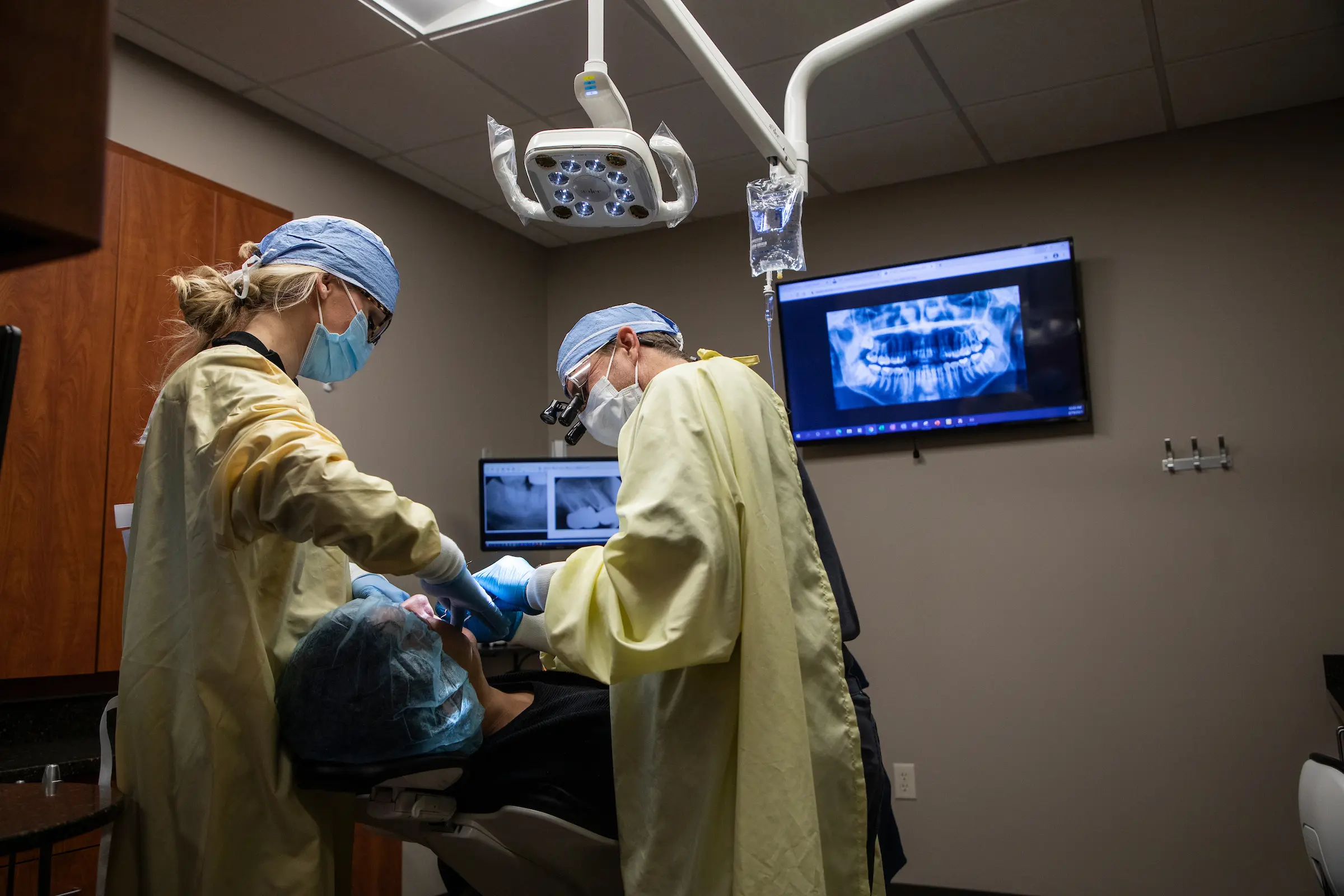
Offering the best periodontal care in the world requires the most advanced technology in the world. Drs. Edwards and Christman are always in search of new ways to provide patients with better results and do so in a way that minimizes pain and recovery time. They are also happy to adopt technologies that make it easier to communicate with patients and allow us to do our jobs in more environmentally friendly ways.
Bruxism Treatment Cost
Like most dental procedures, the final cost for your bruxism treatment will be determined by a variety of factors, such as the severity of your case, the number of appointments, which solution is chosen, and what type of insurance plan you currently have. We can provide you with a more accurate estimate following your initial visit.
Implant Dentistry and Periodontics does accept most dental insurance programs and will be happy to submit a pre-treatment estimate to your insurance carrier so you can determine what your benefits will be. Or, if you are not currently covered by insurance or have concerns about the final cost, we will be happy to discuss other financial arrangements with you.
Earning your Trust with High Quality Periodontal Care
At Implant Dentistry and Periodontics, we know that every patient comes to us with different concerns. Before recommending treatment, we want to hear what's bothering you, what you'd like to accomplish, and what your budget is. From there, we'll go over your options and help you decide what makes the most sense for your situation. Our office also uses modern dental technology to assist with planning and treatment.
We know that dental appointments aren't exactly something most people look forward to. That's why we make a point of explaining what to expect, giving you time to ask questions, and doing what we can to keep you comfortable during your visit. If you'd like to schedule an appointment, you can reach our Indianapolis office at 317-574-0600, located at 8801 North Meridian St., Suite 103, or our Fishers office at 317-842-2273, located at 9885 E. 116th St., Suite 300.