

Gum Surgery
Indianapolis & Fishers, IN
At Implant Dentistry and Periodontics, we offer a wide range of periodontal and dental implant services. Our caring and compassionate team has one collective priority and that is your smile.
Periodontal surgery may be needed to treat certain gum diseases and conditions, such as gingivitis or periodontitis
Gum surgery is sometimes needed when periodontal disease has caused damage to the gums or the bone supporting your teeth. While early gum disease, known as gingivitis, can usually be treated without surgery, more advanced cases of periodontitis may require additional treatment to control the disease and protect your remaining teeth.
As periodontal disease progresses, pockets can form between your teeth and gums. These spaces allow plaque and tartar to accumulate below the gumline, where they're difficult to remove with regular brushing and flossing. In some cases, a deep cleaning isn't enough to address the problem. Gum surgery may then be recommended to reduce the depth of these pockets, remove bacteria and tartar from hard-to-reach areas, or repair some of the damage caused by periodontal disease.
Taking care of your gums is just as important as caring for your teeth. Brushing twice a day, cleaning between your teeth, and keeping up with regular dental appointments can help prevent gum disease or keep an existing condition from getting worse. Because periodontal disease doesn't always cause noticeable pain or other symptoms, routine examinations are particularly important for catching problems before they become more serious.
At Implant Dentistry and Periodontics, we offer surgical and nonsurgical treatment options for patients with gum disease. We'll examine your gums, discuss any concerns you may have, and explain which treatments are appropriate for your condition. To schedule a consultation, call our Indianapolis office at 317-574-0600 or our Fishers office at 317-842-2273.
Award Winning Periodontics
in Indianapolis and Fishers
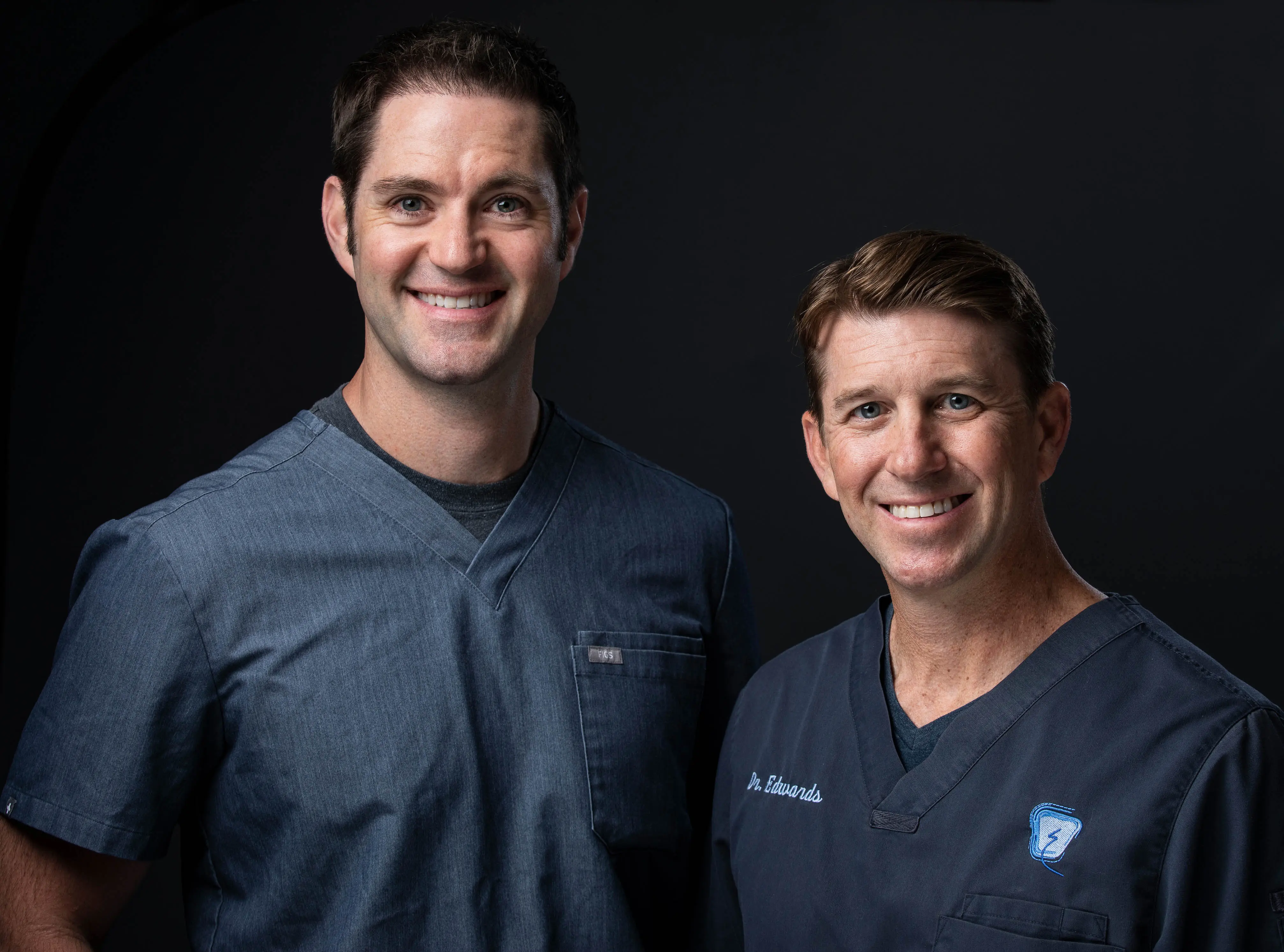
Dedication to providing the best periodontal care to Indianapolis and Fishers isn't just something Drs. Edwards and Christman talk about. They have gone above and beyond what most periodontists do to master his field of work. They have sought out further education to bring the most promising new treatments to their patients.
Some Reasons for Gum Surgery
Gingivitis, which is the first stage of gum disease, can usually be treated by a family dentist. Periodontitis is an advanced form of gingivitis that develops into inflammation and damaged bone and tissue. Periodontitis usually requires a visit to Implant Dentistry and Periodontics, and treatment may involve gum surgery. Gum surgery can reduce gum gaps between the teeth, regrow damaged bone and tissues, prevent tooth loss, and reshape the jawbone to eliminate bacterial growth.
The gum surgery procedure aims to treat the gum disease and any damage it may have caused by:
- eliminating bacteria and infection
- regrowing damaged bones and tissues
- preventing tooth loss
- reducing gum gaps between teeth, known as black triangles
- reshaping the jawbone to lower the risk for bacterial growth
However, gum disease is not the only reason for gum surgery. You may be interested in cosmetic gum surgery, such as when your gums cover too much of your teeth, a condition known as a “gummy smile.”
Are You a Candidate for Gum Surgery?
If you have severe or advanced disease around your gums and the tissues that support your teeth, you are usually a candidate for periodontal surgery.
If you have gum disease, your symptoms might include:
- gums that are swollen, red, or bleeding
- deep pockets that form between your gums and teeth
- bad breath
- pain when chewing
- loose teeth
- gums that recede or pull away from your teeth

At Implant Dentistry and Periodontics, we offer a wide range of periodontal and dental implant services. Our caring and compassionate team has one collective priority and that is your smile.
Contact Our Team Today
The Different Types of Gum Surgery
The type of gum surgery you need will depend on the severity of your gum disease and the specific damage it has done, or the type of cosmetic results you desire. Types of gum surgery offered at Implant Dentistry and Periodontics include:
- Gum Graft- Tissue is taken from the roof of your mouth and stitched into place on either side of a tooth that is exposed due to gums that are receding. This helps even the gum line and reduce sensitivity.
- Gum Regeneration- Gum tissue is folded back, and bacteria are removed. We insert bone grafts, membranes, or tissue-stimulating proteins to help the gum tissues regenerate around the teeth.
- Gingival Flap Surgery- Gums are separated from the teeth for a deep cleaning, then stitched back into place around the teeth. Bone reshaping is sometimes required during the surgery.
- Gingivectomy- Excess and overgrown gum tissue is removed to improve the aesthetics and to make it easier to keep the surface of the teeth clean.
- Gingivoplasty- Healthy gum tissue is reshaped for a more appealing aesthetic look, sometimes in combination with a gum graft.
The Gum Surgery Process
Depending on the type of procedure, a range of things may take place. Most gum surgery procedures usually take around 2 hours to complete. In some cases, the surgery will require you to be asleep or partially asleep during the procedure. Other times, the surgery only involves the use of a local anesthetic to numb your gums.
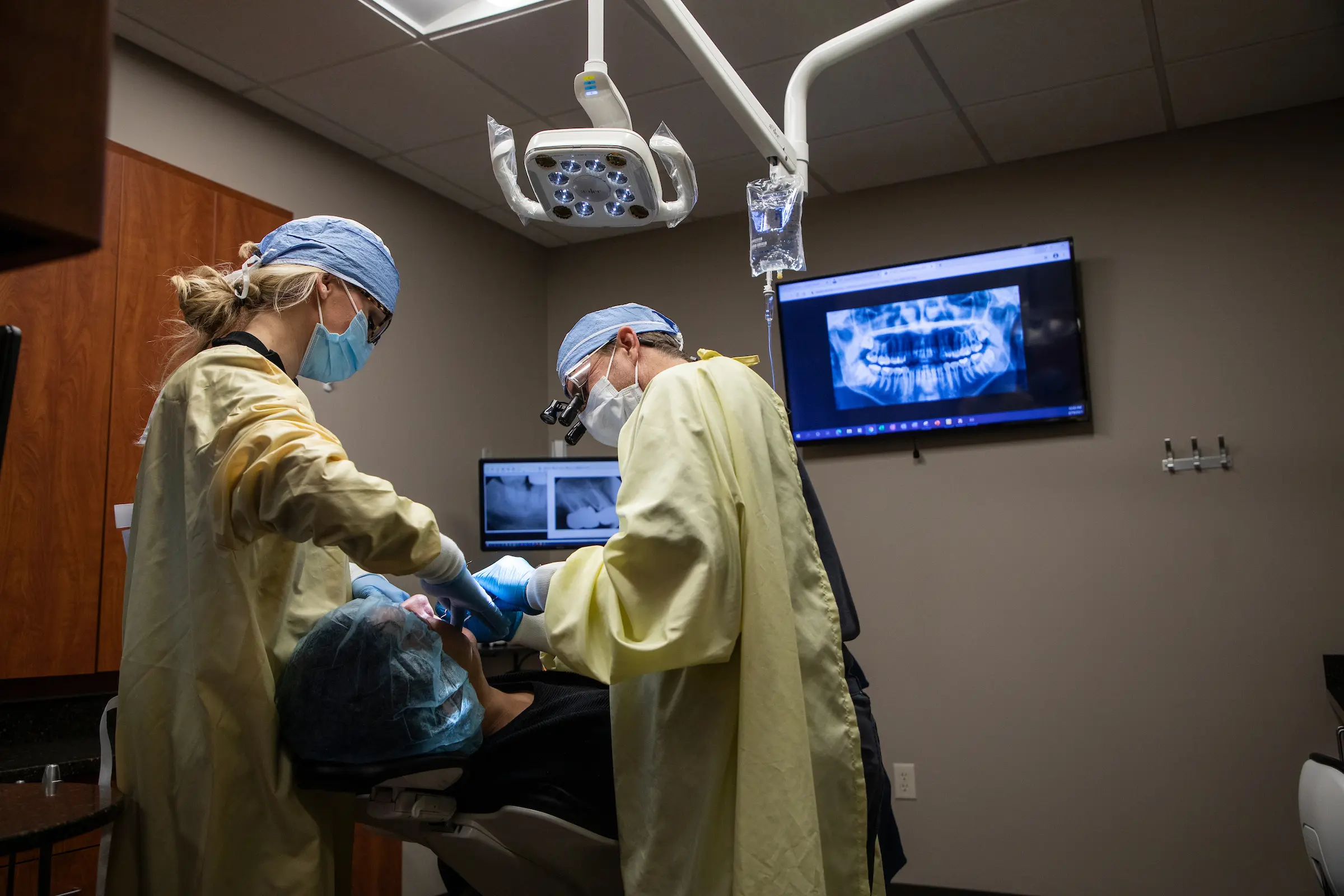
During the procedure, we use sterile equipment, including instruments and drapes, to lower the risk of infection. After making small incisions or cuts along the gum line, we will lift the gums away from the teeth. This allows us to see the roots better so that we can remove and clean away any tartar, plaque, or infection.
Following this deep cleaning, Implant Dentistry and Periodontics can perform other procedures, such as gum reshaping, bone regeneration procedures, or other planned procedures.
Once the planned dental surgery is complete, we will stitch the gums back into place using fine thread stitches. We will remove the stitches 7 to 10 days after surgery.
State of the Art Technology
For Advanced Periodontics
Offering the best periodontal care in the world requires the most advanced technology in the world. Drs. Edwards and Christman are always in search of new ways to provide patients with better results and do so in a way that minimizes pain and recovery time. They are also happy to adopt technologies that make it easier to communicate with patients and allow us to do our jobs in more environmentally friendly ways.
Gum Surgery Aftercare
Recovery times for gum surgery will depend on the type of procedure, but we will schedule a follow-up appointment within 1 to 2 weeks. During your recovery period, you will need to use an antiseptic mouthwash to keep your mouth clean and avoid infection. We may also prescribe an antibiotic.
For the first few days after surgery, you may be instructed to eat soft foods and avoid strenuous exercise. You should also avoid smoking during the entire recovery process.
Earning your Trust with High Quality Periodontal Care
At Implant Dentistry and Periodontics, we know that every patient comes to us with different concerns. Before recommending treatment, we want to hear what's bothering you, what you'd like to accomplish, and what your budget is. From there, we'll go over your options and help you decide what makes the most sense for your situation. Our office also uses modern dental technology to assist with planning and treatment.
We know that dental appointments aren't exactly something most people look forward to. That's why we make a point of explaining what to expect, giving you time to ask questions, and doing what we can to keep you comfortable during your visit. If you'd like to schedule an appointment, you can reach our Indianapolis office at 317-574-0600, located at 8801 North Meridian St., Suite 103, or our Fishers office at 317-842-2273, located at 9885 E. 116th St., Suite 300.