
Implant Problems
Indianapolis & Fishers, IN
At Implant Dentistry and Periodontics, we offer a wide range of periodontal and dental implant services. Our caring and compassionate team has one collective priority and that is your smile.
Even though dental implants have a high success rate, implant problems can occur
Dental implants have a high success rate, but that doesn't mean problems can't develop. Sometimes an issue comes up during the initial healing period, while other complications may not appear until years later. You might notice that your replacement tooth feels loose, the gums around it are swollen, or something has chipped or broken. The good news is that not every implant problem means the entire implant needs to be replaced.
A completed dental implant restoration has several parts. The implant itself is a small post, usually made of titanium, that sits in your jawbone and replaces the missing tooth root. An abutment connects this post to the visible restoration, which may be a crown, bridge, or denture. If a screw comes loose or the restoration becomes damaged, it may be possible to repair or replace that particular component without disturbing the implant beneath it.
Problems involving the implant itself can be more complicated. For example, an implant may fail to bond properly with the surrounding bone during healing. Infection and inflammation can also develop around an implant, sometimes leading to a condition called peri-implantitis. If left untreated, this condition can damage the bone that holds the implant in place. Treatment depends on how far the problem has progressed, and in some cases, the implant may need to be removed.
If something doesn't feel right with your dental implant, it's worth having it checked sooner rather than later. A loose crown isn't necessarily a sign of implant failure, but movement of the implant itself is a more serious concern. We'll need to examine the area and possibly take X-rays to find out what's happening.
At Implant Dentistry and Periodontics, we can evaluate problems with existing dental implants and discuss what treatment may be needed. Whether you're experiencing discomfort, noticing movement, or concerned about the health of the surrounding gums, we're here to help you understand your options. Call our Indianapolis office at 317-574-0600 or our Fishers office at 317-842-2273 to schedule an appointment.
Award Winning Periodontics
in Indianapolis and Fishers
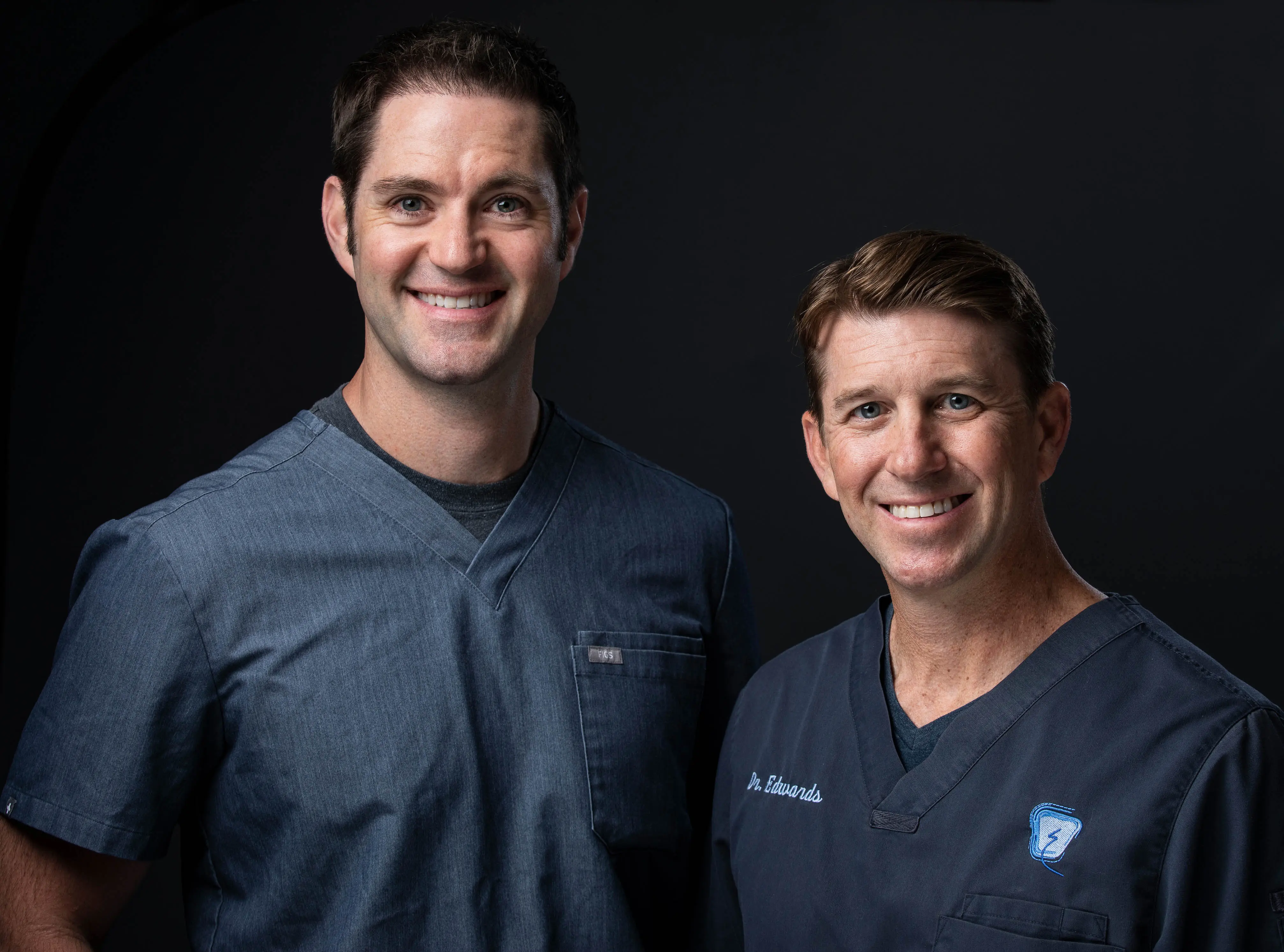
Dedication to providing the best periodontal care to Indianapolis and Fishers isn't just something Drs. Edwards and Christman talk about. They have gone above and beyond what most periodontists do to master his field of work. They have sought out further education to bring the most promising new treatments to their patients.
Main Causes of Dental Implant Problems
The leading causes of implant problems are as follows:
- Incorrect implant placement – the implant is placed at the wrong angle or in an area where the bone density is inadequate; this is a surgical error.
- Dental cement leakage – too much dental cement was used to attach the crown to the implant, causing excess cement to leak out into the gums and irritate the tissues. This leads to infection.
- Poor-fitting crowns – crowns that do not touch the adjacent teeth, leaving open spaces that act as food traps where bacteria will develop and cause infection.
- Diabetes – people with diabetes have a weakened immune system, which allows bacteria around the dental implant to cause infection much quicker.
- Smoking – there are chemicals that are toxic to living tissue in tobacco smoke that kill bone and gum tissue and restrict your blood flow. The immune response is also impaired in tissues where the smoke makes direct contact.
Implant Problems During the Initial Healing Period
For an implant to attach and grow properly, it needs to be surrounded by healthy gums and bone. Many factors can affect an implant's ability to stay attached to the bone.
The implant can become loose during the healing process after surgery. When this happens, there is usually no pain or infection. You may have a limited amount of bone to grow around the dental implant. This can happen with implants placed near the molars in the upper jaw, on extraction sites, on sites where there has been a bone graft, in narrow ridges, and in the lower front of the jaw, because these areas often have poor jawbone density.

At Implant Dentistry and Periodontics, we offer a wide range of periodontal and dental implant services. Our caring and compassionate team has one collective priority and that is your smile.
Contact Our Team Today
Implant Problems During Your Use
You may develop implant problems once it is in use after the healing period. If your jawbone cannot handle the forces being applied to it, the implant can become loose. To treat this issue, Implant Dentistry and Periodontics will remove your implant and allow the bone to fill in the area. This is a surgical procedure that may require bone grafting and sutures, and you will likely be put under local anesthesia. If possible, we will replace the implant once the area has strengthened.
Bone loss can also lead to a loose implant. If you have lost your teeth because of gum disease, you are at higher risk for bone loss around the implant.
More severe dental implant problems can arise if the implant becomes infected. Peri-implantitis is a disease that causes loss of the bone supporting the implant and usually requires removal of the implant. In some cases, the implant can be restored.
Structural Implant Problems
An implant has several components: the implant placed into the jawbone, the abutment or extension that connects the post to the prosthesis, which may be a crown, bridge, or denture that serves as your tooth replacement. Even though the abutment is made from strong materials, it can break, as can the screw that attaches the abutment to the implant body. All the components made of metals or ceramic can wear down and fracture, including the crown. If part of your implant breaks or fractures, Implant Dentistry and Periodontics can assess the problem and determine what treatment is required.
If you grind your teeth, you can damage the crown on your implant. We can help you find a night guard to limit the effects of tooth grinding on that artificial crown.
Diagnosing and Correcting a Problem
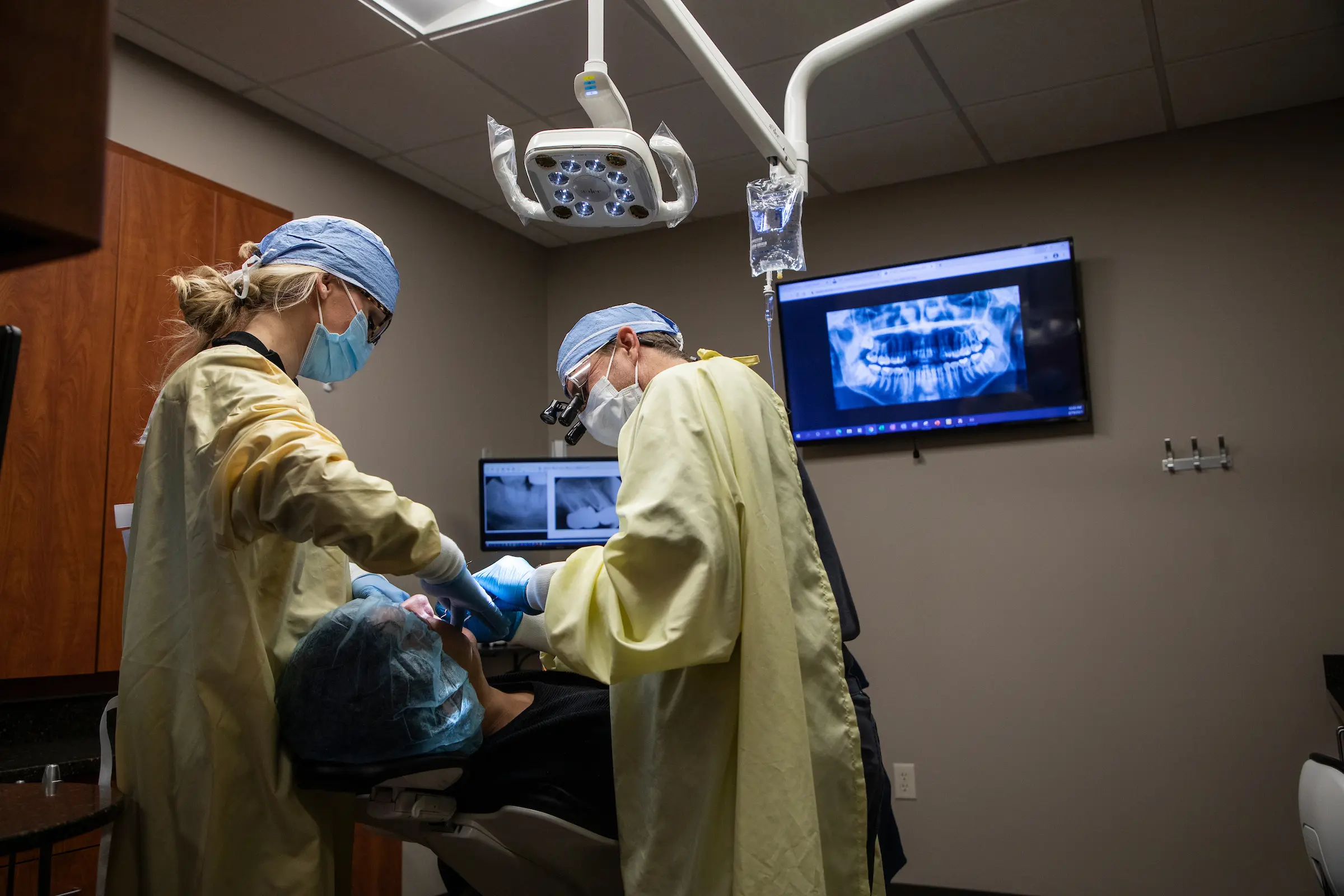
Implant Dentistry and Periodontics start with thorough diagnostics to troubleshoot the problem and determine the best course of treatment. We will first review your dental history and take full digital photos, X-rays, and, when needed, a 3D CT scan.
We will check for dental cement leakage and will examine the fit of the dental restoration on top of your implant. We may need to look under the gumline, which allows us to assess the state of infection or other complications without the need for surgery.
State of the Art Technology
For Advanced Periodontics
Offering the best periodontal care in the world requires the most advanced technology in the world. Drs. Edwards and Christman are always in search of new ways to provide patients with better results and do so in a way that minimizes pain and recovery time. They are also happy to adopt technologies that make it easier to communicate with patients and allow us to do our jobs in more environmentally friendly ways.
Customized, Thorough Treatment
Your treatment will depend on the problem and its cause. If the crown is faulty, we can easily place a new crown. If jawbone has been lost, we will perform a bone graft to regenerate the lost bone. If there is infection, we will remove the diseased tissue and clean out the plaque and bacteria to ensure the infection is removed completely.
Implant Dentistry and Periodontics will always try to save your implant if possible. If the implant cannot be saved, we will be able to remove the implant and properly place a new one in most cases.
Earning your Trust with High Quality Periodontal Care
At Implant Dentistry and Periodontics, we know that every patient comes to us with different concerns. Before recommending treatment, we want to hear what's bothering you, what you'd like to accomplish, and what your budget is. From there, we'll go over your options and help you decide what makes the most sense for your situation. Our office also uses modern dental technology to assist with planning and treatment.
We know that dental appointments aren't exactly something most people look forward to. That's why we make a point of explaining what to expect, giving you time to ask questions, and doing what we can to keep you comfortable during your visit. If you'd like to schedule an appointment, you can reach our Indianapolis office at 317-574-0600, located at 8801 North Meridian St., Suite 103, or our Fishers office at 317-842-2273, located at 9885 E. 116th St., Suite 300.