
Dental Implants
Indianapolis & Fishers, IN
At Implant Dentistry and Periodontics, we offer a wide range of periodontal and dental implant services. Our caring and compassionate team has one collective priority and that is your smile.
Dental implants are successful in replacing missing teeth by mimicking natural teeth as closely as possible
A dental implant replaces the root of a missing tooth, providing support for an artificial tooth that looks and functions much like a natural one. Most implants are made from titanium and are placed directly into the jawbone. Over time, the surrounding bone bonds with the implant, creating a stable foundation for a replacement crown, bridge, or denture.
Losing a tooth can change more than the appearance of your smile. Without a tooth root in place, the jawbone in that area may gradually shrink. Dental implants can help reduce this bone loss while also restoring some of your ability to chew comfortably. Because they're anchored in the jaw, implant-supported teeth can feel more secure than removable dentures. They also allow you to replace a missing tooth without having to reshape neighboring healthy teeth, as is often necessary with a traditional dental bridge.
Dental implants can be used to replace a single tooth, several missing teeth, or even an entire arch. However, they're not necessarily the right choice for everyone. The condition of your gums, the amount of available jawbone, and your overall health can all affect whether you're a good candidate. Some patients may also need bone grafting or other treatment before an implant can be placed.
At Implant Dentistry and Periodontics, we'll examine your mouth and discuss which tooth replacement options make sense for your situation. We'll also explain what to expect during treatment, including healing time and how to care for your implants afterward. To schedule a consultation, call our Indianapolis office at 317-574-0600 or our Fishers office at 317-842-2273.
Award Winning Periodontics
in Indianapolis and Fishers
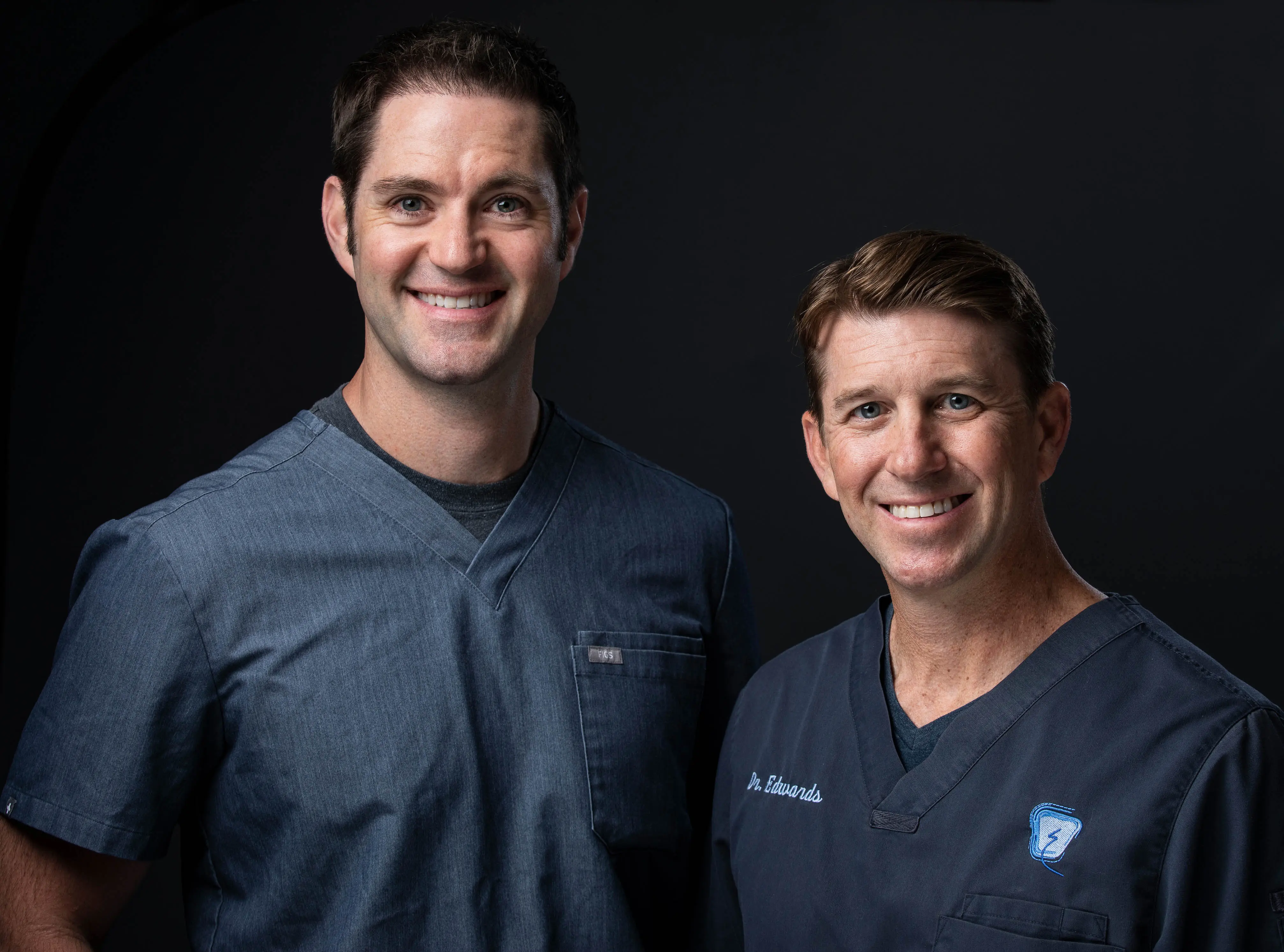
Dedication to providing the best periodontal care to Indianapolis and Fishers isn't just something Drs. Edwards and Christman talk about. They have gone above and beyond what most periodontists do to master his field of work. They have sought out further education to bring the most promising new treatments to their patients.
The Benefits of Dental Implants
There are many benefits to having dental implants. The most important benefit related to dental implants is one you cannot even see, and that is that they preserve the natural integrity of your jaw. Also, by filling in the gaps where your teeth are missing, you can prevent other issues from developing. If left untreated long enough, large spaces will allow the adjacent teeth to move, resulting in new gaps between other remaining teeth and changes in the bite pattern. Dental implants will also improve your overall aesthetic appearance and return the self-confidence that comes with a healthy smile. Dental implants allow for the continuation of normal oral hygiene habits such as brushing and flossing. Here are a few benefits of dental implants:
- Maintains the integrity of jawbone density after tooth loss.
- Preserves the health of the adjacent teeth since there is no need for their support for a dental bridge.
- Replaces loose-fitting dentures or bridges.
- Distributes bite forces evenly throughout the mouth.
- They function and feel like natural teeth, as the artificial root delivers pressure and temperature sensations.
- Improves your talking and speaking ability.
- Improves facial appearance by preventing sagging.
Are You a Candidate for a Dental Implant?
Losing a tooth can certainly be devastating, not only because it affects the perception of your smile, but also because it can lead to other problems that may affect your overall oral health. It is extremely important to replace missing teeth with dental implants sooner rather than later to prevent health consequences such as:
- Jawbone atrophy and the deterioration of the bone
- The shifting and drifting of the neighboring teeth in the gap
- Alteration in the bite and alignment issues because of shifting teeth
- Jaw joint problems
- Difficulty in chewing and speaking properly
- Added stress on the remaining natural teeth

At Implant Dentistry and Periodontics, we offer a wide range of periodontal and dental implant services. Our caring and compassionate team has one collective priority and that is your smile.
Contact Our Team Today
The Dental Implant Placement Procedure
It usually takes several visits to Implant Dentistry and Periodontics and several months to complete the dental implant process. The process will begin with an evaluation, during which we will determine if dental implants are the best restoration option for you. We will focus primarily on evaluating what type of damage or decay your teeth have and if teeth will need to be extracted. After this has been determined, we will then perform an examination of your jawbone to make sure that the bone and structural integrity are strong enough to support an implant.
If your jawbone is not strong enough, we will suggest a dental bone graft. Bone grafting has a high success rate and provides sufficient bone density to support a dental implant successfully. Here are the steps.
- Planning stage: This is the most important part of the process. A carefully thought-out treatment plan can be the difference between success and failure. Sometimes it may require us to use specialized imaging to visualize your bone condition and 3-D scanning to ensure precise post placement.
- Implant placement: Implant Dentistry and Periodontics will surgically place the dental implant in the ideal spot to allow the bone to grow around the implant.
- Healing: The jawbone around the dental implant will grow and integrate with the new titanium implant in a matter of a few short months.
- Temporary restoration: If the dental implant is in a visible area, we will place a temporary restoration for aesthetic purposes while the site heals.
- Abutment placement: When healing is complete, the dental implant abutment or extension is placed to connect the dental implant to the porcelain crown.
- Porcelain crown: Once our dental lab fabricates the new porcelain crown to exact specifications, we bond the crown to the abutment. That is the final step, and you are good to go.
Suggestions on Dental Implant Aftercare
The initial healing process after your dental implant placement may take a few weeks, so it is beneficial to stick to a diet of softer foods and then gradually introduce harder foods into your diet. As your discomfort subsides, you can gradually return to your normal eating habits.
Once you are completely recovered, the most important thing is to continue to practice good oral hygiene habits and take care of your dental implants. Maintaining these consistent oral hygiene habits is essential to preventing any additional disease from developing. Be sure to brush twice daily for at least two minutes each time you brush. Continue regular flossing habits and consider introducing an antimicrobial mouth rinse into your routine.
Along with these at-home habits, it is also important that you continue scheduling checkups at Implant Dentistry and Periodontics. Visiting us twice a year will allow us to conduct deep cleanings and monitor the overall state of your oral health, practicing preventative dentistry.
State of the Art Technology
For Advanced Periodontics
Offering the best periodontal care in the world requires the most advanced technology in the world. Drs. Edwards and Christman are always in search of new ways to provide patients with better results and do so in a way that minimizes pain and recovery time. They are also happy to adopt technologies that make it easier to communicate with patients and allow us to do our jobs in more environmentally friendly ways.
Earning your Trust with High Quality Periodontal Care
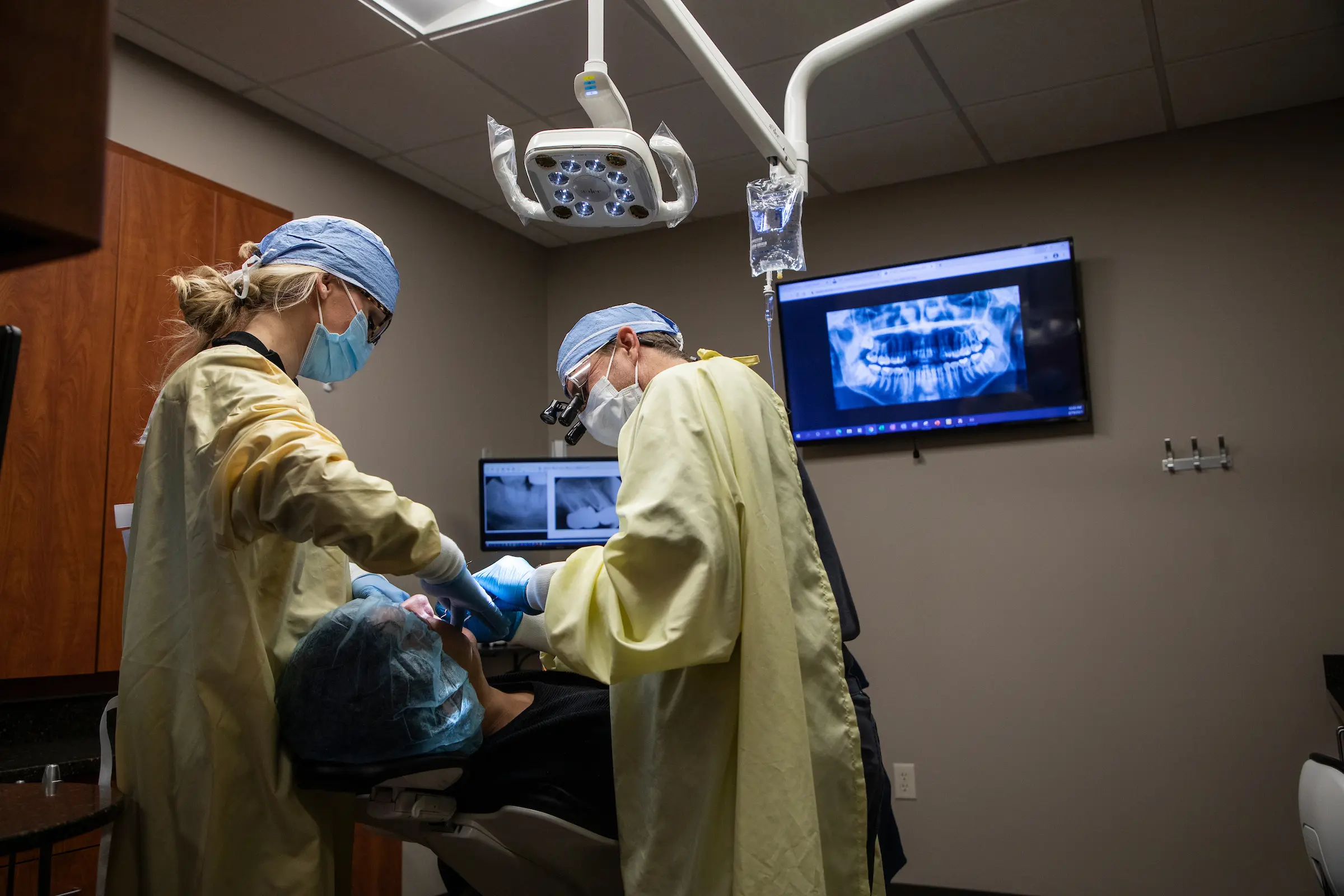
At Implant Dentistry and Periodontics, we know that every patient comes to us with different concerns. Before recommending treatment, we want to hear what's bothering you, what you'd like to accomplish, and what your budget is. From there, we'll go over your options and help you decide what makes the most sense for your situation. Our office also uses modern dental technology to assist with planning and treatment.
We know that dental appointments aren't exactly something most people look forward to. That's why we make a point of explaining what to expect, giving you time to ask questions, and doing what we can to keep you comfortable during your visit. If you'd like to schedule an appointment, you can reach our Indianapolis office at 317-574-0600, located at 8801 North Meridian St., Suite 103, or our Fishers office at 317-842-2273, located at 9885 E. 116th St., Suite 300.