
Implant Supported Bridges
Indianapolis & Fishers, IN
At Implant Dentistry and Periodontics, we offer a wide range of periodontal and dental implant services. Our caring and compassionate team has one collective priority and that is your smile.
The artificial crowns of an implant supported bridge are mounted to a dental implant
If you're missing several teeth in a row, a dental bridge can fill the gap and restore your ability to chew comfortably. Traditional bridges are typically held in place by crowns attached to the natural teeth on either side of the space. While this approach works well for many patients, it usually requires reshaping those neighboring teeth to make room for the crowns.
An implant-supported bridge works a little differently. Instead of relying on your remaining teeth, the bridge is attached to dental implants placed in your jawbone. This means the neighboring teeth don't need to be altered to support the replacement teeth. It also provides a stable foundation that can help reduce the bone loss that often occurs when teeth are missing.
The number of implants needed depends on how many teeth you're replacing and the condition of your jawbone. Once the implants are placed, they generally need several months to heal and bond with the surrounding bone. Small connecting pieces, called abutments, are then used to secure the bridge to the implants. The finished restoration is designed to look and function much like your natural teeth.
Not everyone has enough jawbone to support implants right away. If you've experienced bone loss, you may need a bone graft to rebuild the area before the implants can be placed. In some cases, grafting can be done during implant placement. We'll need to examine your jaw and review dental imaging to determine what treatment would be appropriate.
At Implant Dentistry and Periodontics, we can help you explore your options for replacing multiple missing teeth. If you're interested in an implant-supported bridge, call our Indianapolis office at 317-574-0600 or our Fishers office at 317-842-2273 to schedule a consultation.
Award Winning Periodontics
in Indianapolis and Fishers
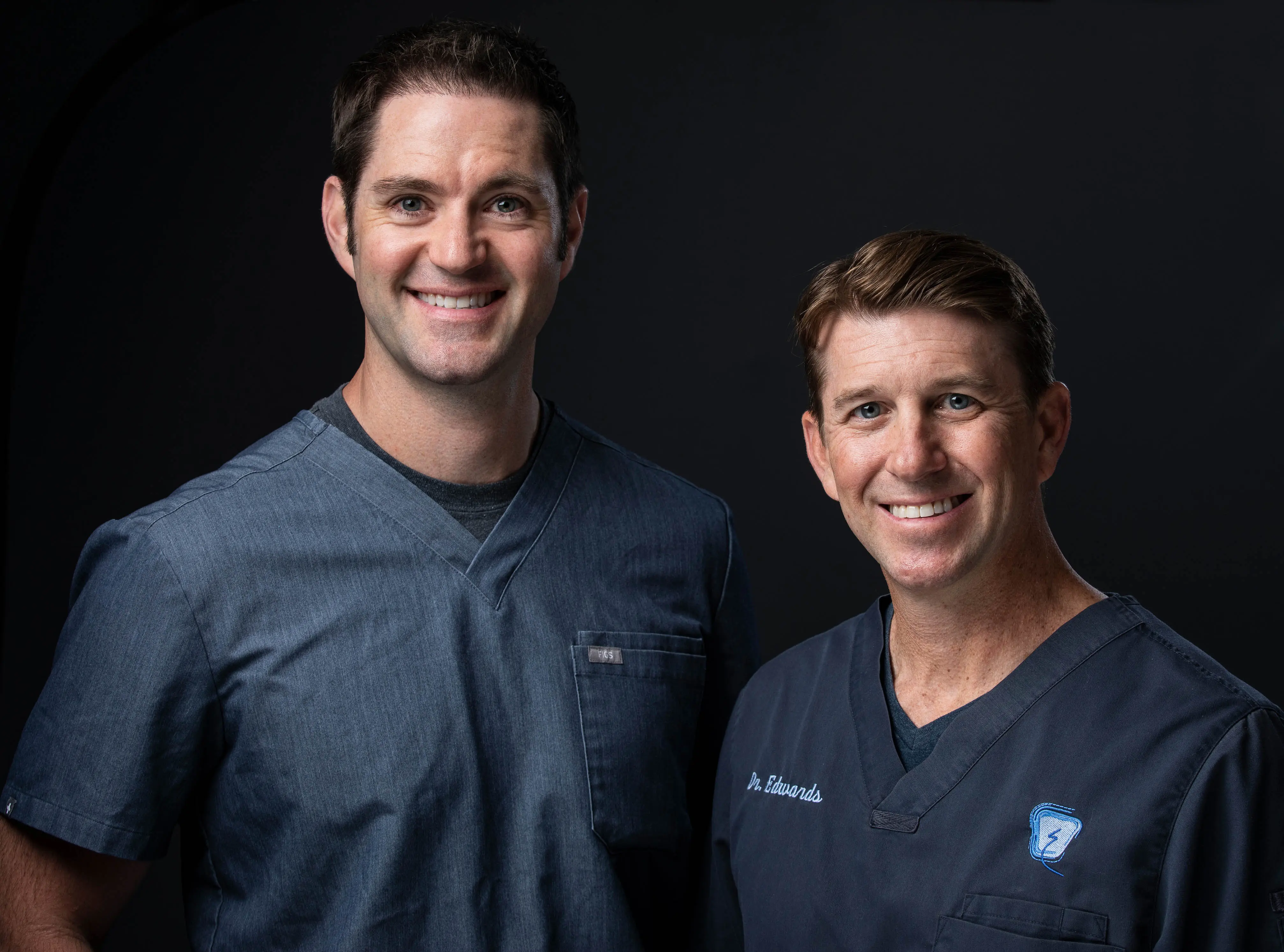
Dedication to providing the best periodontal care to Indianapolis and Fishers isn't just something Drs. Edwards and Christman talk about. They have gone above and beyond what most periodontists do to master his field of work. They have sought out further education to bring the most promising new treatments to their patients.
The Pros and Cons of an Implant Supported Bridge
The most obvious cons of an implant-supported bridge are the length of time it takes for all the stages of treatment to be complete, and the cost of this multi-step procedure will be higher than a traditional bridge. Despite these downfalls, most of the patients at Implant Dentistry and Periodontics find that the pros of an implant supported bridge outweigh these few cons.
An implant supported bridge does not require any alteration to your natural teeth. The two adjoining teeth do not need to undergo the prep to support crowns. The dental implants will hold your bridge securely so that it feels and functions just like your natural teeth and is just as easy to care for. Dental implants will also act as artificial tooth roots, which stimulate the jaw to maintain density and prevent jawbone atrophy. The life expectancy of an implant supported bridge will be superior to that of a traditional bridge as well. Since we are not putting crowns on two natural teeth, the restoration looks even more natural.
Are You a Candidate for an Implant Supported Bridge?
Most people are qualified to have a single dental implant at Implant Dentistry and Periodontics. However, because an implant-supported bridge requires a second implant, we will want to make sure that your jaw is strong enough and that there is adequate bone density. We will conduct an oral examination and capture digital X-rays before we start the procedure.
Also, as a dental implant patient, you must be committed to maintaining exceptional oral hygiene. An implant supported bridge will be a permanent prosthetic that must be cleaned just like your natural teeth. Without the attachments to the adjoining teeth, you will be able to floss daily, and the artificial crowns need to be brushed as well. Regular checkups every six months are strongly encouraged as well.

At Implant Dentistry and Periodontics, we offer a wide range of periodontal and dental implant services. Our caring and compassionate team has one collective priority and that is your smile.
Contact Our Team Today
The Implant Supported Bridge Procedure
An implant-supported bridge will require several stages of treatment, which are usually spaced out over the span of about six to nine months. First, after the initial evaluation has confirmed the necessary bone density, we will surgically place the dental implants into the jawbone beneath the area of tooth loss. After this surgery, the bone tissues need sufficient time to grow and fuse with the dental implants in a process called osseointegration.
After osseointegration is finished, the second stage of treatment is scheduled. During this second procedure, we will attach abutment posts, or extensions, to the implants. After this step of treatment, the gums will again need about two weeks to heal.
The final stage of implant supported bridge treatment involves the actual placement of the custom-designed bridge to the implants. A special dental compound is used to bond the dental bridge, with several artificial crowns, to the abutment posts. This secures your new dental bridge so that it becomes like a natural part of the smile.
Receiving an implant supported bridge will require several appointments with Implant Dentistry and Periodontics.
With your continued preventative oral hygiene care at home and scheduling your regular dental checkups every six months, your implant supported bridge will last for decades, and you will be able to smile and eat all the foods you enjoy. Your smile will be perfectly natural; you will have no stability issues with biting, chewing, and speaking, and the artificial root of the implant maintains the health of the jawbone, so you will not experience any changes in your facial structure.
State of the Art Technology
For Advanced Periodontics
Offering the best periodontal care in the world requires the most advanced technology in the world. Drs. Edwards and Christman are always in search of new ways to provide patients with better results and do so in a way that minimizes pain and recovery time. They are also happy to adopt technologies that make it easier to communicate with patients and allow us to do our jobs in more environmentally friendly ways.
Earning your Trust with High Quality Periodontal Care
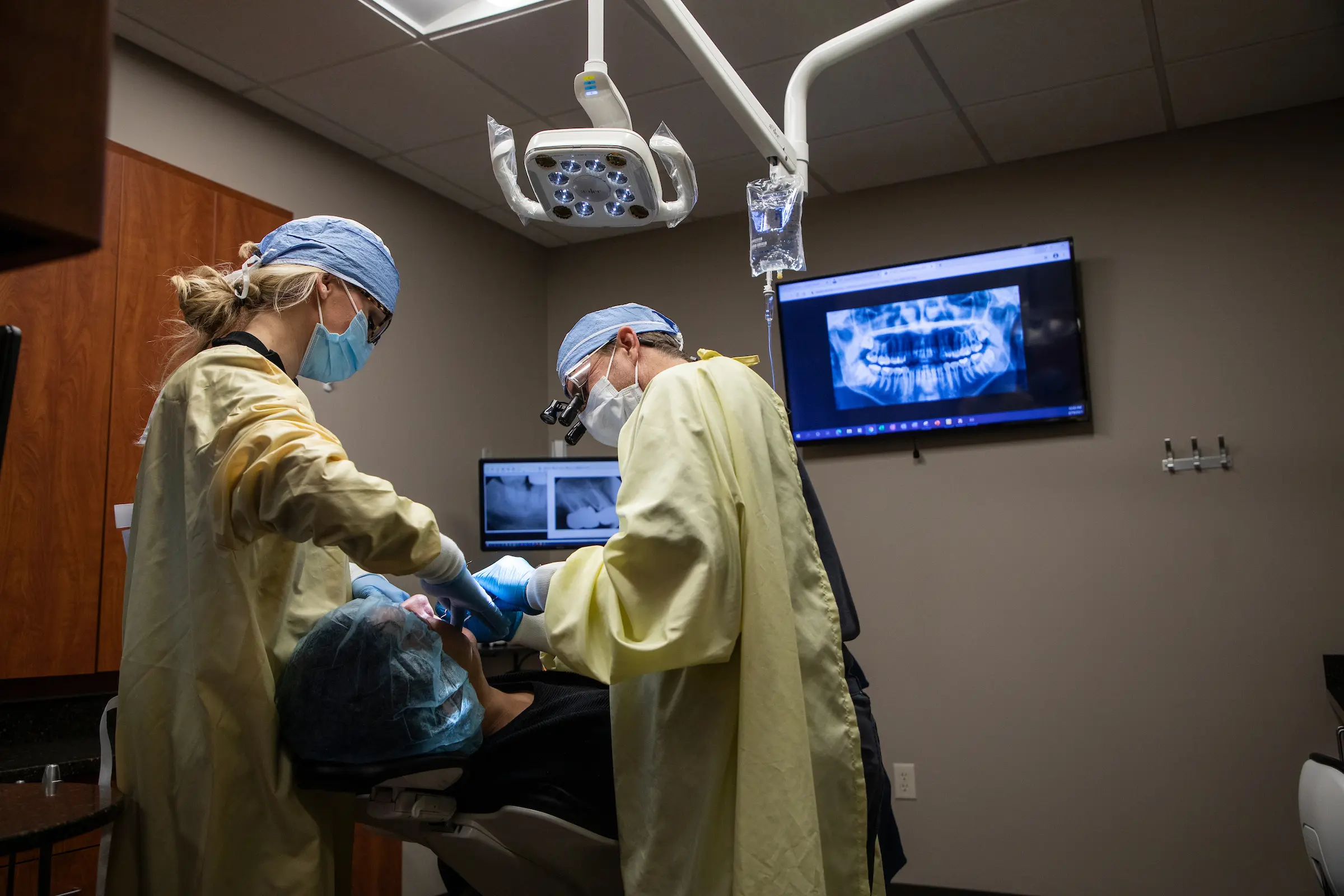
At Implant Dentistry and Periodontics, we know that every patient comes to us with different concerns. Before recommending treatment, we want to hear what's bothering you, what you'd like to accomplish, and what your budget is. From there, we'll go over your options and help you decide what makes the most sense for your situation. Our office also uses modern dental technology to assist with planning and treatment.
We know that dental appointments aren't exactly something most people look forward to. That's why we make a point of explaining what to expect, giving you time to ask questions, and doing what we can to keep you comfortable during your visit. If you'd like to schedule an appointment, you can reach our Indianapolis office at 317-574-0600, located at 8801 North Meridian St., Suite 103, or our Fishers office at 317-842-2273, located at 9885 E. 116th St., Suite 300.